
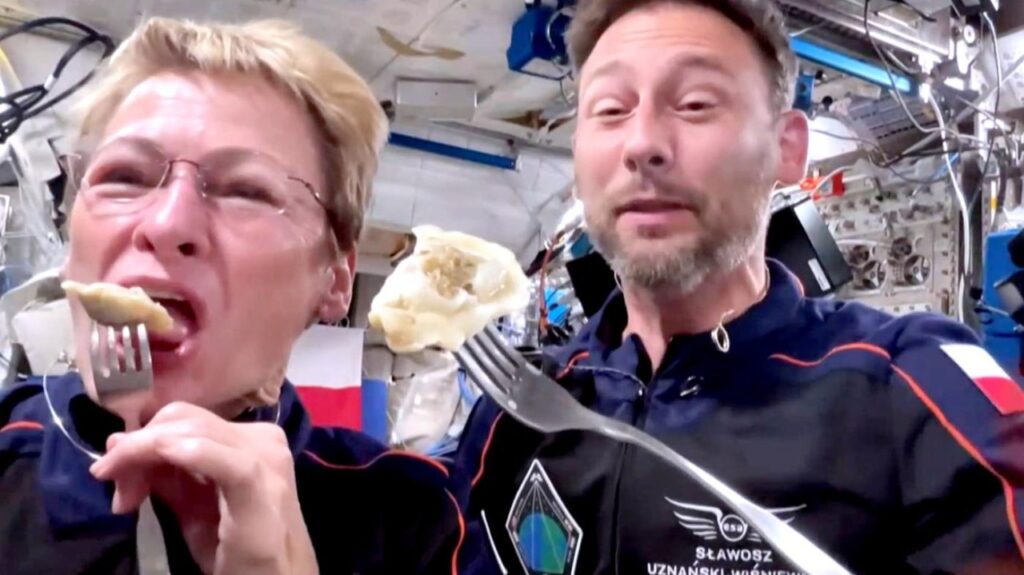
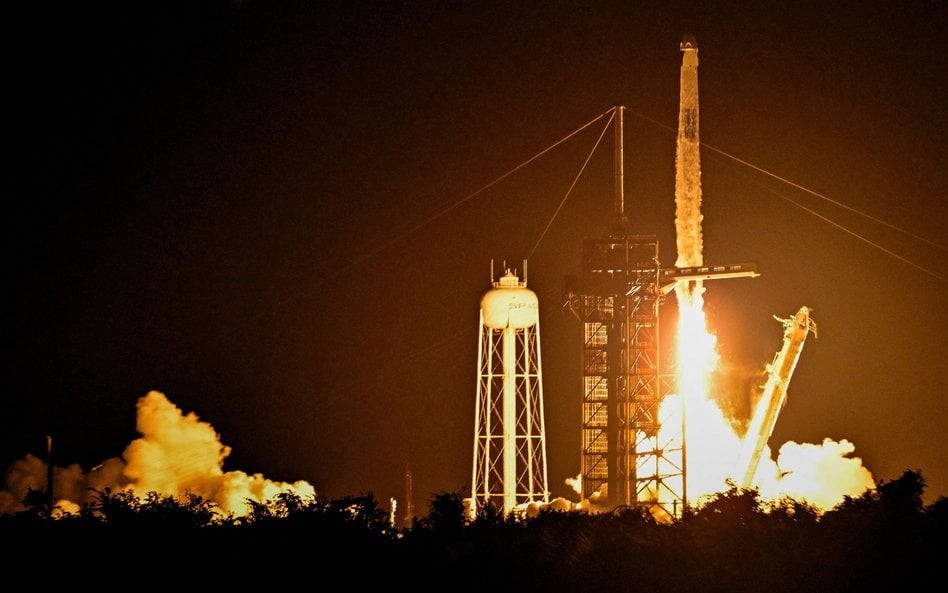
On June 25, 2025, Axiom Space Mission-4 launched with the Polish IGNIS program. The next day, the Dragon capsule “Grace” docked with the International Space Station. Dr. Sławosz Uznański-Wiśniewski spent a total of 19 days, 4 hours and 45 minutes in space, conducting 13 Polish experiments and a series of live educational connections to schools in Łódź, Wrocław, Rzeszów and Warsaw. He returned to the country on July 24. These are facts, not fireworks — they create capital that we should now “burn” wisely: in laboratories, at universities and in schools.
Why a “non-Polish rocket” is not a problem
.This is the European standard: the state purchases a seat on a commercial flight and implements its own scientific-educational program. IGNIS was financed mainly from ministerial funds and from an optional contribution to the European Space Agency – ESA; the cost of participation is approximately €65 million. This model is not a “prestige fee.” It’s a shortcut to orbit, technology validation in real conditions and visibility that — if we manage it well — we’ll convert into trust in science and orders for companies. Returns in the space sector are measured in years, but without the first step, there are no subsequent ones.
Po powrocie: dwie perspektywy, które da się pogodzić
Science popularizers (including Tomasz Rożek, PhD and Maciej Kawecki, PhD) rightly reminded that the first days after landing are a golden window for building authority: universities and high schools, well-prepared Q&As, concrete data and clear materials for teachers.
The essence of this mission was supposed to be promoting Polish science and building trust in it. Something more than a selfie – Maciej Kawecki, PhD.
On the other hand, media analysts and PR experts emphasized the unprecedented scale of reach: ~1.9 billion total reach and 4.7 million interactions across all types of media, prime time minutes worth — in advertising equivalent — hundreds of millions of złoty.
One minute in prime time of such medium is worth 80 to 100 thousand złoty – Mateusz Sabat
There’s no contradiction here. Reach is fuel. Only the engine gives it meaning — the educational and technical plan.
However, emotions trigger communication chaos and a lack of a precise idea: “what to do with this next.” As if the fuel was enough only for the flight itself, not for the image management of the whole project. It’s clearly visible that POLSA Polish Space Agency | Polish Space Agency doesn’t have or hasn’t shown a communication strategy for the entire project so far, not just its spectacular elements: launch, experiments and landing. We haven’t learned the answer to a basically simple question “what does this mean for all of us“?
Science “in human terms”: three examples everyone will understand
Politics and pop culture? Yes indeed. They’ve always been in space
The space race was a political project from the beginning, and pop culture was its megaphone. Sputnik (1957) demonstrated system efficiency, Apollo (1969) became a global sign of US superiority; military programs operated in the background — ballistic missiles, reconnaissance satellites — that pushed forward launch vehicles, control systems and materials. Even the Strategic Defense Initiative in the 1980s changed the parameters of the political game. Today’s “Race 2.0” has new accents: commercialization (constellations), orbital tourism and USA-China geopolitical rivalry, but the logic of soft power and spectacle remains the same. The difference is that today we don’t have to pretend it’s otherwise — it’s enough to consciously combine science with a good scenario for the viewer, student and investor.
Essentially, the dispute about “politicization” and “pop culture” is futile if it’s not accompanied by a question about social purpose. The USSR and the USA knew perfectly well how to capitalize on flights and heroes – cosmonauts and astronauts – but we remember primarily the breakthrough ones, because their story had a clear scenario and consequence: it led from launch to change on Earth. This is exactly what we need today: a transition from admiration to habit.
In practice, this means:
- publicly available quarterly reports with results and conclusions (in the language of benefits for schools and companies),
- a cycle of meetings at universities and high schools with substantive Q&A,
- materials for teachers (lesson scenarios about experiments) and communication that extends space beyond “electronics”: to biology, medicine, law, and even art.
ESA, money and what comes next
Poland increased its optional contribution to ESA to approximately €200 million annually — this is a real pass to larger programs and contracts. The first effects are already visible: contracts and declarations of about €35 million for 2026–2028 (e.g. KP Labs, Creotech Instruments S.A., SatRev). This is just the beginning, but the direction is clear: “flight” → “data flight” → “orders flight.” The return will be stretched over time, but the path is set.
Sławosz Uznański-Wiśniewski’s flight was a giant leap for Poland and a small step for humanity — and very good – author
Big enough for us to do lasting things: lessons and programs for schools, data translated into implementations, contracts in ESA and the next step of Polish astronautics. Space doesn’t like short distances. It likes the consistent.